Introduction to the Paradigm of Anupana In the classical science of Ayurveda...
In classical Ayurveda, medicine was never intended to act alone. The therapeutic effect of a formulation is deeply influenced by the medium with which it is administered, known as Anupana.
This carrier substance directs the medicine, improves its absorption, modulates its potency, and aligns it with the patient’s physiological state. Despite its central role in traditional practice, the science of Anupana has gradually been overlooked in modern Ayurvedic consumption.
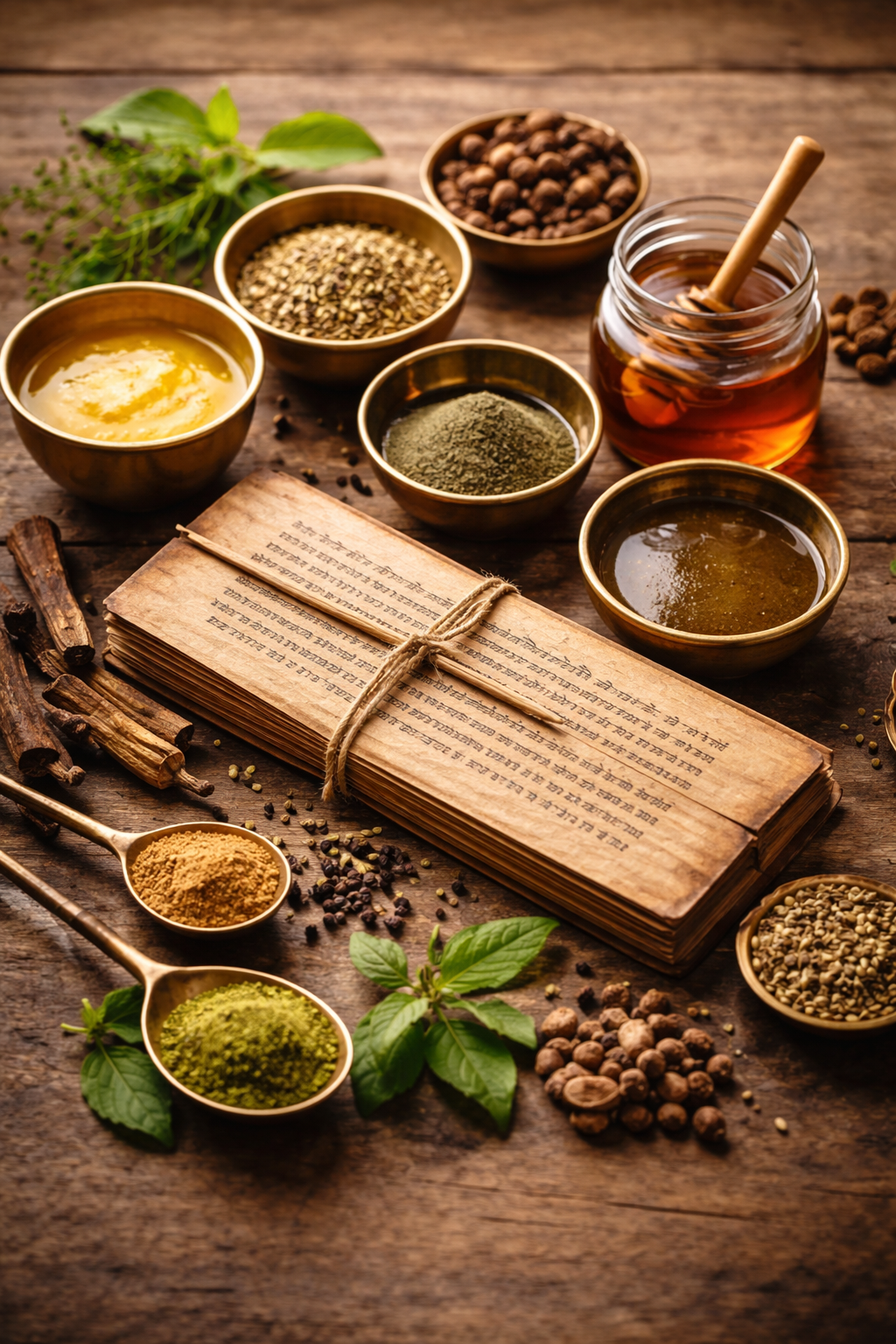
Traditional texts prescribe specific Anupanas, such as ghee, honey, buttermilk, herbal decoctions, or warm water, to guide medicines toward particular tissues and disease pathways. These carriers influence digestion, bioavailability, tissue targeting, and dosha balance. In many cases, the same medicine may produce entirely different therapeutic outcomes depending on the Anupana used.
Reviving the classical science of Anupana for modern healthcare involves several practical and scientific challenges. While traditional texts describe these carriers extensively, translating them into standardized, scalable, and clinically reliable formats requires careful research, quality control, and formulation development.
Standardization – Classical Anupanas were traditionally prepared fresh; creating consistent ready-to-use formulations is technically demanding.
Raw Material Authenticity – Quality variations in ghee, honey, herbs, and fermented carriers directly affect therapeutic outcomes.
Shelf-Life & Stability – Natural liquid carriers are highly sensitive to microbial growth, oxidation, and environmental exposure.
Clinical Validation – Demonstrating measurable improvements in absorption, delivery, and therapeutic effect requires structured research.
Regulatory Compliance – Modern safety, labeling, and manufacturing regulations must align with traditional formulation principles.
Patient Convenience – Making classical carriers practical for modern lifestyles without compromising authenticity remains a key challenge.
Our research explores how classical carriers influence absorption, tissue delivery, metabolic transformation, and therapeutic direction of medicines. By studying the pharmacological and biochemical behavior of these media, we aim to develop intelligent delivery systems that improve the effectiveness of Ayurvedic formulations in chronic disease management and preventive health care.
At Kalpatantra, our work begins with a systematic study of classical references across Charaka Samhita, Sushruta Samhita, Ashtanga Hridaya, Kashyapa Samhita, and other traditional sources. We analyze how different Anupanas were historically prescribed for specific formulations, diseases, seasonal conditions, and patient constitutions. This research allows us to map the therapeutic logic behind carrier selection and understand its clinical implications in contemporary practice.
The Future of Anupanam
Through this initiative, Kalpatantra seeks to revive the deeper pharmaceutical intelligence of Ayurveda. By combining classical textual knowledge, clinical observation, and modern formulation science, the Anupanam project aims to reintroduce targeted therapeutic carriers into contemporary practice, making Ayurvedic treatment more precise, effective, and accessible for the modern world.
Translating Classical Knowledge into Modern Formats
One of the major challenges today is practical usability. Many traditional Anupanas require preparation that modern patients cannot easily perform. Our innovation focuses on designing ready-to-use classical carriers that retain traditional principles while meeting modern expectations of convenience, safety, and stability. These systems aim to simplify clinical use without compromising Ayurvedic authenticity.

Introduction to the Paradigm of Anupana In the classical science of Ayurveda...
Website security powered by MilesWeb