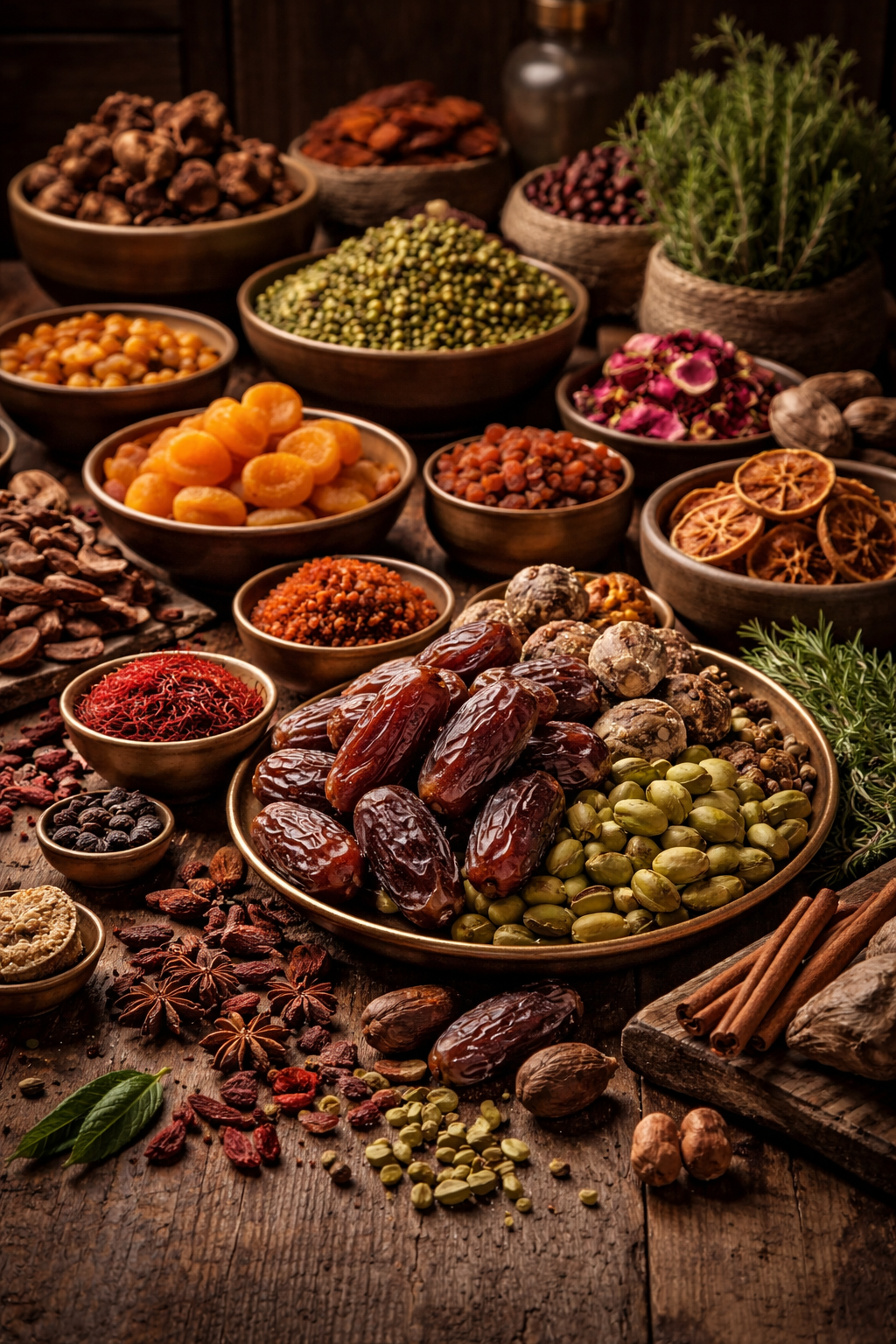

The international botanical trade is currently navigating a period of profound structural realignment. As worldwide markets for goods keep pushing for the same types of crops to be produced in large amounts, a movement is starting that focuses on collecting and preserving unique and local plant materials. This change involves moving away from trading large amounts of crops to creating a specialized system that aims to protect original natural environments and traditional farming practices. The possibility of creating a worldwide collection of rare herbs, roots, seeds, and dried foods depends on a deep understanding of terroir, which includes how the height of the land, the type of soil, and traditional harvesting methods affect the strength and uniqueness of the plants.
The Ecological Imperative: Terroir, Altitude, and Phytochemical Plasticity
The fundamental value of a rare botanical collection is rooted in the biological concept of phenotypic plasticity—the ability of a single genotype to produce different phenotypes in response to environmental stimuli. In the context of medicinal and aromatic plants, this plasticity translates into the synthesis of secondary metabolites, which are often produced as adaptive responses to environmental stressors absent in standardized industrial farming.
Altitudinal Gradients as Bioactive Triggers
High-altitude environments are characterized by extreme conditions, including intensified ultraviolet (UV-B) radiation, lower temperatures, and reduced oxygen availability. Research into the Himalayan herb Reinwardtia indica demonstrates that these stressors act as catalysts for the production of essential compounds such as phenols, flavonoids, and tannins. Specimens harvested at an altitude of 2,000 meters in the Chail region of the Himalayas exhibited significantly higher antioxidant and antimicrobial properties than those harvested at lower elevations.
| Altitude Zone | Elevation (m) | Key Bioactive Profiles | Soil and Environmental Influence |
| Low Altitude | 800 | Baseline secondary metabolites; lower antioxidant capacity. | Higher soil pH (less acidic); moderate nutrient availability. |
| Mid-Elevation | 1300 | Intermediate phenolic content; increasing rutin levels. | Balanced soil chemistry; transition in mycorrhizal diversity. |
| High Altitude | 2000 | Peak levels of Phenols (142.63 mg/g) and Flavonoids (51.59 mg/g). | Acidic soil; high organic carbon, phosphorus, and nitrogen. |
This data suggests that the “uniqueness” of a botanical is not merely genetic but ecological. For example, in the study of Asarum sieboldii, researchers found that high-altitude areas enhanced nitrogen metabolism in leaves and carbon metabolism in roots, which directly influenced the accumulation of medicinal components like asarinin and sesamin. Consequently, a curated collection must identify “ecological harvest zones” where the interplay of specific minerals (e.g., Cu, Mg) and climate gradients (space-for-time substitutions) maximizes the plant’s therapeutic profile.
The Microbiome of Authenticity: Soil Ecology and Mycorrhizal Fungi
A critical, yet often overlooked, component of botanical provenance is the soil microbiome. Arbuscular mycorrhizal fungi (AMF) form mutualistic relationships with plant roots, aiding in nutrient uptake and stress tolerance. However, the relationship between AMF and rare botanicals is complex; in high-altitude Himalayan sites, mycorrhizal spore diversity and root colonization actually decrease as altitude increases. This indicates that high-purity botanicals from extreme habitats may rely more on internal chemical defenses than on fungal symbiosis, a distinction that is lost in mass cultivation where artificial fertilizers disrupt these delicate ecological balances.
The Crisis of Industrial Dilution: Losing Botanical Purity
The modern agricultural supply chain is architecturally designed for stability and volume, a goal that is fundamentally at odds with the preservation of rare botanical lineages. This dilution of authenticity occurs at three primary stages: seed selection, cultivation methodology, and post-harvest processing.
Genetic Erosion and the Replacement of Heirloom Varieties
The global herb seeds market, valued at US$1.21 billion in 2024, is increasingly dominated by hybrid seeds optimized for yield and pest resistance. While efficient for commodity trade, these hybrids often lack the complex chemical profiles of heirloom varieties that have been refined over generations of traditional selection. Heirloom seeds, typically defined as open-pollinated cultivars farmed for 50 years or more, are vital repositories of genetic variation and cultural stories.
In regions like Tennessee and North Carolina, traditional seed saving of vegetables like the ‘Turkey Craw’ bean is declining, replaced by formalized but fragmented seed-swapping networks. The loss of these lineages leads to “genetic attrition,” where the unique traits adapted to specific local micro-climates are permanently lost. For a premium sourcing network, the challenge is to bypass the “commercial nursery stock”—which often has unknown or distant genetic origins—and reconnect with the “strictly local ecotype”.
| Sourcing Strategy | Primary Objective | Ecological Benefit | Genetic Risk |
| Hyper-Local Provenance | Preserve unique local identity. | Maintains co-evolved relationships with pollinators. | Risk of inbreeding in small populations. |
| Regional Admixture | Increase genetic diversity. | Enhances resilience to environmental shifts. | Potential dilution of unique local adaptations. |
| Commercial Nursery | High-volume availability. | Low cost and ease of access. | High risk of maladaptation and genetic pollution. |
| Native Cultivars | Horticultural aesthetics. | Uniform growth and performance. | Lack of genetic diversity; reduced value to wildlife. |
Industrial Processing as a Vector for Degradation
Post-harvest handling is the most sensitive phase for maintaining botanical purity. Commodity supply chains often utilize rapid thermal drying to reduce moisture from 80% to 10% for easier transportation and longer shelf life. While effective for volume, high-heat processes can volatilize essential oils and degrade bioactive enzymes.
Traditional harvesting practices, in contrast, emphasize timing and temperature. Herbs should be harvested mid-morning after the dew dries but before the heat of the day, ensuring that oil concentrations are at their peak. Curing—a slower, more gentle drying process at temperatures below 90°F (32°C)—is preferred for maximizing desirable oils and flavor profiles in high-value botanicals like culinary herbs and medicinal plants. The industrial model’s focus on energy efficiency and speed often leads to a “flat” chemical profile, where the subtle aromatic and medicinal nuances of the fresh plant are lost.
Authentication Architectures: Technology as a Proxy for Trust
In a market where authenticity drives a premium, the traditional “trust-based” relationship between collector and buyer is being replaced by a multi-layered technological framework. This infrastructure ensures that rare materials are not only authentic in name but also in their genomic and chemical composition.
Genomic Verification: DNA Barcoding and NGS
DNA barcoding has emerged as the premier molecular tool for the traceability of raw botanical materials. By targeting standardized gene sequences—such as rbcL and matK for plants or the ITS2 region for nuclear ribosomal DNA—researchers can identify species with high precision, even after they have been processed into powders or extracts.
Leading botanical firms like Indena have pioneered the use of “orthogonal” identification techniques, where DNA sequencing is used alongside traditional macroscopic and microscopic analysis. A significant breakthrough in this field is the bCUBE, a field-based device that allows for real-time PCR (Polymerase Chain Reaction) analysis. This device enables the identification of botanical species at the source in roughly one hour, recording GPS data to ensure that a specimen of, for example, Vaccinium myrtillus (Bilberry), was truly harvested from its claimed ecological habitat.
The Socio-Technical Traceability Stack
A robust authenticity-driven sourcing network must implement a five-layer traceability and anti-counterfeiting framework.
- Identity Layer: Assigning unique digital IDs to every farmer, collector, and plot using GPS mapping to verify origin.
- Sensing Layer: Utilizing IoT sensors to monitor environmental conditions (terroir) and drying parameters in real-time.
- Intelligence Layer: Applying AI to interpret chemical fingerprints (e.g., Ultra Performance Liquid Chromatography) and detect adulteration.
- Integrity Layer: Employing blockchain technology to create an immutable record of the ingredient’s journey from “seed to shelf”.
- Interaction Layer: Providing consumers and institutional buyers with QR-coded “Fair Trace Tools” to verify social impact and botanical purity.
This system is essential for high-risk, high-value botanicals like Saffron or Rhodiola, where the risk of fraud is pervasive. Traceability in this context is not merely for compliance; it is a commercial requirement that enables access to premium global markets.
Geographical Indications and the Value of Regional Identity
Geographical Indication (GI) tagging serves as a critical bridge between traditional agricultural knowledge and modern market systems. It provides a legal framework to protect products whose quality, reputation, or other characteristics are essentially attributable to their geographical origin.
GI-Tagged Produce: Market Differentiation and Farmer Empowerment
GI status allows agricultural products to command a price premium of 10% to 30% over non-certified counterparts. For example, Darjeeling Tea, known as the “champagne of teas,” derives its unique muscatel flavor from the specific soil and high-altitude conditions of West Bengal. Similarly, Assam Orthodox Tea is celebrated for an aroma shaped by the region’s unique climatic conditions.
| Product Type | GI Examples | Key Quality Determinant | Market Positioning |
| Grains | Basmati Rice | Indo-Gangetic Plains (Soil/Water) | Culinary Symbol / Export Leader |
| Spices | Guntur Sannam Chilli | Pungency/Color (Andhra Pradesh) | Global Spice Heritage |
| Fruits | Nagpur Oranges | Sweetness/Juiciness (Maharashtra) | Regional Ecological Advantage |
| Specialty | Naga Mircha (King Chilli) | Extreme Pungency (Nagaland) | Gourmet/Niche Luxury |
The value chain for GI-tagged products, particularly in India, is primarily smallholder-based, involving landholdings of 1–2 hectares. By documenting traditional farming practices and preventing unauthorized usage of product names, GI tags safeguard indigenous knowledge and biodiversity. This creates an economic incentive for rural communities to maintain ancient practices rather than shifting to high-yield, low-quality commodity crops.
Historical Validation: Classical Texts as Premium Market Categories
The curation of rare botanicals is increasingly informed by classical knowledge systems such as Traditional Chinese Medicine (TCM), Ayurveda, and Unani medicine. These systems, some dating back over 5,000 years, provide the foundational theoretical frameworks for the “food and medicine continuum” that is now being rediscovered by modern nutraceutical markets.
The Brhattrayi and Ancient Pharmacopoeias
In Ayurveda, the triad of classical texts—the Charak Samhita, Sushurta Samhita, and Ashtanga Hridaya (collectively known as the Brhattrayi)—detail intricate procedural instructions for herbal remedies and surgeries. These texts emphasize that the exact method of treatment must vary according to the unique needs of the patient and the availability of specific herbs. Modern manufacturers like Arya Vaidya Sala (Kottakkal) now utilize these specifications to produce standardized Ayurvedic preparations in pharmaceutical-grade facilities, bridging the gap between ancient wisdom and contemporary quality control.
Similarly, TCM is based on foundational texts like the Huangdi Neijing (Yellow Emperor’s Inner Classic) and the Shennong Bencaojing. These works classify over 7,300 species of plants not just by their chemical composition but by their “signature energy vibrations” and their holistic impact on the body’s organ systems. The global market for these products is substantial; China’s annual herbal drug production is valued at US$48 billion, with significant exports to markets like Japan, South Korea, and Singapore.
The Food-Medicine Continuum in Western Antiquity
The concept of “let food be thy medicine” has its roots in the Hippocratic Corpus of the 5th and 4th centuries BCE. Historical analysis shows that 33 out of 44 sampled medicinal plants in these texts were also used for nutritional purposes. This tradition was succeeded by Galenic humoral theory, which categorized all substances by properties of warm, cool, dry, or moist—a system that continues to influence Islamic medicine and modern holistic wellness trends.
Market Dynamics: Global Demand and Institutional Clusters
The demand for rare, high-purity botanicals is no longer a niche phenomenon. It is driven by a massive global healthcare market, projected to reach US$478.93 billion by 2032, with a compound annual growth rate (CAGR) of 11.21%.
Institutional Buyers and Quality Standards
Institutional demand comes from four primary clusters:
- Pharmaceutical and Research Laboratories: These buyers require botanical reference standards (BRM) of extremely high purity for use as controls in drug discovery and efficacy testing. Organizations like the NIH (National Institutes of Health) fund Botanical Research Centers to study the prebiotic and clinical impacts of these materials.
- Traditional Medicine Manufacturers: Companies producing Ayurveda, Siddha, and Unani (ASU) medicines need consistent, lab-tested raw materials to ensure therapeutic efficacy and safety.
- Luxury Culinary and Specialty Markets: Michelin-starred restaurants (MSR) and high-end grocers seek out rare “superfoods” and heirloom varieties (e.g., Saffron, black garlic, unique chillies) to offer innovative menus and social status value to their customers.
- Nutraceutical and Wellness Brands: The rise of functional foods—such as mushroom coffees infused with Cordyceps or ashwagandha-based stress relief supplements—is blurring the lines between nutrition and pharmaceuticals.
Case Study: The Cordyceps Sinensis Market
Cordyceps sinensis, a parasitic fungus native to the Himalayan region and Tibetan Plateau, exemplifies the “ultra-premium” botanical category. Valued for its bioactive compounds like cordycepin and polysaccharides, it is used to enhance energy, stamina, and immune function.
| Market Metric | Value / Data Point | Growth Driver |
| Market Size (2025) | US$1.32 Billion – $2.51 Billion | Rising lifestyle diseases and health awareness. |
| Projected Size (2032) | US$4.17 Billion | Advancements in artificial cultivation/extraction. |
| CAGR (2025-2032) | 7.5% – 10.3% | Expansion of nutraceutical distribution channels. |
| Top Consumption Region | North America | Popularity in mushroom-based functional foods. |
| Top Production Region | Asia-Pacific (China/India) | Traditional usage and cultivation partnerships. |
The scarcity of natural Cordyceps (harvested only above 3,500m) has led to extremely high pricing, prompting manufacturers to innovate with cultivated alternatives like Cordyceps militaris, which now accounts for over 60% of the extract market. However, the wild-harvested Himalayan fungus remains the benchmark for “authenticity” and potency in the luxury tier.
Ethical Sourcing and the Nagoya Protocol: Reversing Biopiracy
The establishment of a global botanical collection must navigate the “very neocolonial” financial disparities inherent in current supply chains. Indigenous workers harvesting ingredients like jasmine or sandalwood often earn as little as €6 per day, while the global perfume market generates over €50 billion annually.
Access and Benefit-Sharing (ABS) Mechanisms
The Nagoya Protocol is a supplemental agreement to the Convention on Biological Diversity (CBD) designed to ensure that the benefits arising from the utilization of genetic resources are shared fairly with the countries and communities of origin. This framework empowers countries to exercise “biological sovereignty,” requiring Prior Informed Consent (PIC) and Mutually Agreed Terms (MAT) before research or commercial development begins.
Effective benefit-sharing models include:
- Monetary Benefits: Royalties, milestone payments, and direct profit-sharing.
- Non-Monetary Benefits: Technology transfer, training for local collectors, and the sharing of research results.
- Indigenous Ownership: Models like Dutjahn Sandalwood Oils in Australia are 50% owned by indigenous nations, ensuring that revenue from rare botanical extracts stays within the community to fund youth programs and land stewardship.
Direct Trade and Living Wage Premiums
While Fair Trade is a critical baseline for commodities, Direct Trade is often more appropriate for rare botanicals, as it allows for higher pricing and greater transparency. In these models, the cost of raw botanical concentrate is so low relative to the final product’s retail price (often only 1% to 5%) that paying farmers a significantly higher “living wage” has negligible impact on production costs but a transformative impact on rural livelihoods.
Supply Chain Design: From Small-Scale Collectors to Global Markets
Designing a supply chain for rare botanicals requires a fundamental departure from the “volume-focused” standard agricultural model. Instead, it must focus on “phytochemistry and provenance”.
The Role of Primary Producer Companies (PPCs)
To aggregate materials from scattered, small-scale collectors and traditional farmers, the establishment of Primary Producer Companies (PPCs) and cooperatives is essential. These organizations provide the necessary infrastructure for:
- Quality Control: Standardizing the first-stage processing (drying/cleaning) to maintain bioactive integrity.
- Collective Marketing: Allowing smallholders to access global markets under a certified brand (e.g., GI tag).
- Sustainability Monitoring: Ensuring that wild-harvesting does not exceed the 10-20% threshold of available seeds, which is necessary to prevent local extinctions.
Specialized Logistics and “Seed-to-Shelf” Traceability
Unlike wheat or corn, many botanicals are “wild-crafted” and highly time-sensitive. Active compounds can degrade quickly, requiring immediate post-harvest cooling or drying. The supply chain must account for these “terroir effects” through batch-level chain of custody. For a premium network, this means shifting from supplier self-attestations and paper certificates to “primary, real-time data” on origin and quality.
Botanical Preservation: Commercialization as a Tool for Conservation
A curated botanical collection can function as a dual-purpose system: a premium market ecosystem and a preservation initiative. In an era where 40.6% of medicinal plant species are threatened, the commercialization of rare varieties provides the financial resources needed to protect their habitats.
Ex Situ and In Situ Conservation Strategies
Preservation efforts are increasingly multifaceted:
- In Situ Conservation: Creating Medicinal Plants Conservation and Development Areas (MPCDAs) and engaging local communities through Joint Forest Management Committees (JFMCs).
- Ex Situ Conservation: Establishing seed banks and “metacollections” in botanical gardens like the NYBG.
- Cryopreservation: For “exceptional” species whose seeds cannot be conventionally banked, storage in liquid nitrogen (LN) is used to preserve genetic material for centuries.
Initiatives like the Nurturing Nature Initiative illustrate how botanical gardens act as hubs for climate-smart plant material, connecting science with community-led restoration projects. Profitable, nature-friendly businesses (e.g., startups like Phool, which converts floral waste into high-end incense) demonstrate that curbing nature loss can be a billion-dollar investment opportunity.
Economic Potential and Long-Term Viability
The long-term viability of a global authenticity-driven network is supported by several converging economic trends.
Growth Across All Premium Segments
| Market Segment | 2024-2025 Value | Forecasted Growth (CAGR) | Institutional Relevance |
| Medicinal Herbs | US$227.65 Billion | 11.21% (to 2032) | High (Pharma/OTC) |
| Herb Seeds | US$1.21 Billion | 4.89% (to 2032) | Moderate (Agriculture) |
| Dried Fruit/Nuts | US$90.2 Billion | 7.0% (to 2032) | High (Luxury CPG) |
| Herbal Medicine | US$251.24 Billion | 8.37% (to 2034) | Critical (Global Health) |
The economic potential is particularly strong in the Asia-Pacific region, which dominates both the production and consumption of traditional remedies, holding a 40% share in many segments. However, North America and Europe are the fastest-growing markets for “clean-label,” organic, and traceable products.
Sustainability and Risk Mitigation
The primary risks to this model include climate change, which is reducing habitat suitability for over 100 medicinal species, and the high cost of specialized cultivation. However, the transition toward regenerative agriculture and low-carbon technologies (e.g., drip-irrigated seed farms used by companies like Bejo Seeds) is helping to mitigate these risks and align with corporate ESG (Environmental, Social, and Governance) targets.
Conclusion: The Future of the Global Authenticity Network
The establishment of a curated global collection of rare botanicals is not merely a commercial opportunity but a strategic necessity for the preservation of biodiversity and traditional knowledge. The traditional commodity model, with its reliance on hybrid seeds and industrial processing, has failed to deliver the phytochemical purity required by modern pharmaceuticals, researchers, and luxury connoisseurs.
By integrating high-altitude ecological precision with advanced authentication technologies like field-based DNA barcoding and blockchain ledgers, it is now possible to build a premium sourcing network that offers absolute certainty of origin. This system, anchored in the ethical frameworks of the Nagoya Protocol and Geographical Indications, ensures that the most authentic materials are available to the world while empowering the indigenous communities and traditional farmers who serve as the stewards of these rare plant lineages. The economic potential for this network is vast, supported by a multi-billion dollar wellness market and a growing institutional demand for high-purity, traceable materials. Ultimately, such a network serves as a living laboratory for the “food-medicine continuum,” proving that the preservation of nature’s rarest materials is the key to the future of global health and sustainable culinary traditions.